
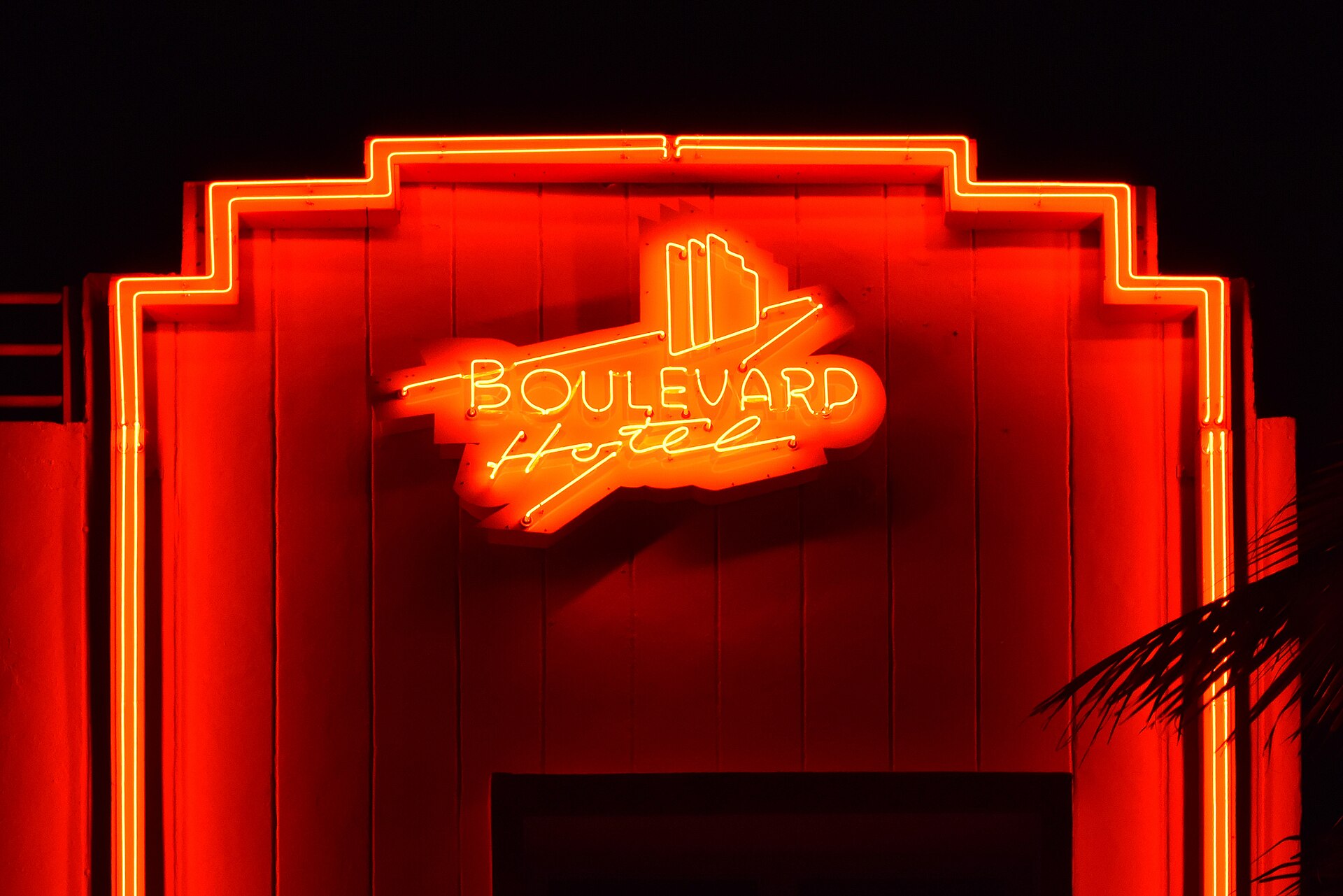
Boutique hotels in Miami exist because the city has the right raw material for them. Hundreds of small Art Deco and MiMo buildings, a design culture that takes interiors seriously, and enough visitor demand to keep independent operators viable. The result is a deep bench of hotels under roughly 100 rooms where the building itself is part of the experience rather than a container for it.
This guide covers what actually separates a boutique hotel from a small chain property, where the strongest clusters are, and what to check before booking. Prices in Miami swing hard with the calendar, so note upfront that peak season runs roughly December through April at higher rates, while summer into early fall is hurricane season with meaningfully lower pricing.
The word gets applied loosely. In practice the useful markers are:
If a property has 400 rooms, a convention floor and a chain loyalty program, it may be very good, but it is not boutique.
The Miami Beach Architectural District holds one of the largest concentrations of Art Deco buildings anywhere, and most of them are hotels. Collins Avenue, Ocean Drive and the side streets between them are dense with restored 1930s properties.
The Betsy on Ocean Drive is one of the better known independents, pairing a historic building with a rooftop deck and a serious jazz and literary programming schedule. The Marlin, the Cardozo, the Kent and a long list of similarly scaled Deco properties fill out the range, with condition and quality varying considerably between them.
What you get here is location and character. Rooms in original Deco buildings are frequently small by modern standards, bathrooms tend to be compact, and soundproofing depends entirely on how thorough the last renovation was. What you get in exchange is a walk-out-the-door position near the sand, Lincoln Road and Espanola Way.
Practical tip: on Ocean Drive and lower Collins, ask for an interior or courtyard-facing room. Weekend nights are loud.
South of Fifth sits at the southern tip of Miami Beach. It is still walkable to the sand and to South Beach proper, but the streets are calmer and the crowd skews residential. Several small design-forward properties operate here, and it is the strongest choice if you want boutique character without the Ocean Drive volume.
Coconut Grove trades beach access for tree cover, marina views and a quieter evening. The neighborhood suits boutique properties well because the whole area is low-rise and green. Mayfair House Hotel and Garden is the property most often cited, a mid-century structure reworked around courtyards and planting.
Expect a 25 to 35 minute drive to the beach without traffic. In exchange you get a base with genuinely good independent restaurants and a very different daily rhythm from Miami Beach. It works particularly well for longer stays.
Coral Gables is the most architecturally consistent neighborhood in Miami, built around Mediterranean Revival design with wide tree-lined streets. The Biltmore is the landmark here and is not small, but the neighborhood also supports smaller properties like the Hotel St Michel, a historic 1920s building on a corner near Miracle Mile.
The Gables suits travelers who want quiet evenings, dependable dining and a sense of place. It is the least beach-convenient option in this guide.
Wynwood proper has limited hotel inventory relative to its visitor volume, but the surrounding area supports several design-heavy properties. The Arlo Wynwood is the most prominent recent addition, a full boutique property in the middle of the mural district with a rooftop pool.
This area is the right choice if your trip is about galleries, murals, bars and food rather than sand. You are roughly 20 to 30 minutes from the beach. The Design District, immediately north, adds high-end retail and a strong restaurant cluster.
| Area | Character | Beach | Typical peak rate |
| South Beach Deco | Historic, lively, walkable | On the sand | Roughly $250 to $500 |
| South of Fifth | Calmer, residential | Walkable | Roughly $300 to $550 |
| Coconut Grove | Green, marina, quiet | 25 to 35 min | Roughly $200 to $400 |
| Coral Gables | Formal, architectural | 30 min plus | Roughly $200 to $400 |
| Wynwood adjacent | Art, nightlife, murals | 20 to 30 min | Roughly $200 to $400 |
Treat these as directional. Midweek and shoulder-season stays often fall well below the low end.
Are boutique hotels in Miami more expensive than chains?
Not necessarily. In South Beach, restored Deco properties often price below the large beachfront resorts because rooms are smaller and amenities are fewer. In the Grove and the Gables, boutique properties frequently represent better value than beachfront alternatives.
Which area is best for a first boutique stay?
South Beach or South of Fifth if you want the beach and the Art Deco architecture, which is the reason most people come. Choose Wynwood-adjacent instead if murals, galleries and bars matter more than sand.
Do boutique hotels have parking?
Often valet only, and often at a meaningful daily rate. In dense South Beach blocks some properties have no on-site parking at all and use nearby garages. Confirm before you rent a car.
Decide whether you want the beach or the neighborhood first, then shortlist within one cluster. Compare against the broader options in our guide to where to stay in Miami, read up on the surrounding areas in best neighborhoods in Miami, and plan your days around the things to do in Miami.